This Indian Wildlife Lodge Gives You Access to One of the Country’s Best Tiger Reserves—and It Has Treehouse ‘Nests’
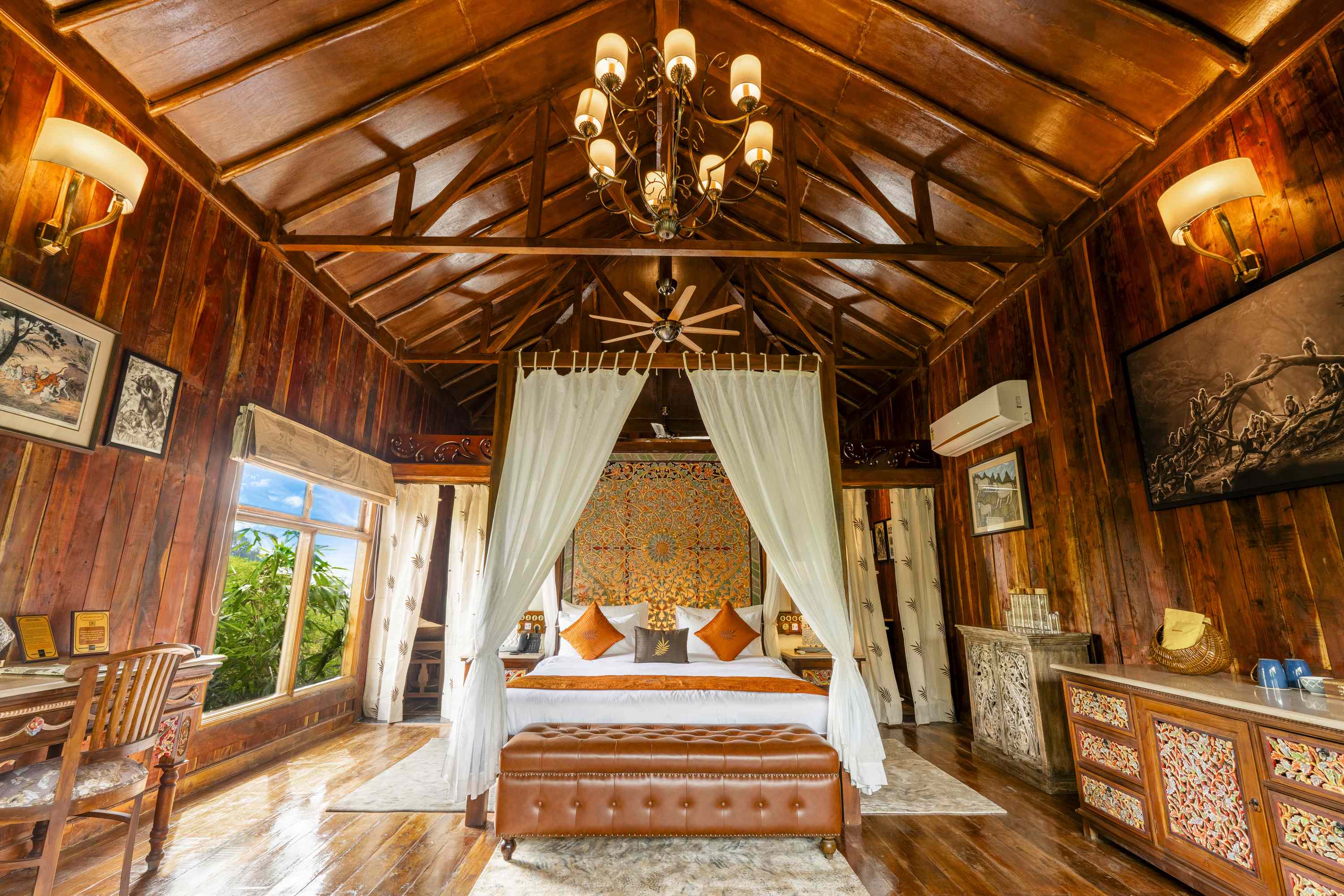
Inside a luxury nest, the guest accommodations at The Bamboo Forest Nature Conservancy.Credit: The Bamboo ForestThe Bamboo Forest Nature Conservancy
The Bamboo Forest Nature Conservancy is a 10-room wilderness lodge set on 250 acres of restored land near Nagpur, India.
Guided game drives offer opportunities to see Bengal tigers, while walking safaris reveal birds, wetlands, farms, and other wildlife.
The stay includes spacious elevated rooms, locally sourced meals, wellness treatments, and quiet spaces for relaxing between safaris.
The central Indian state of Maharashtra is considered one of the best places to see wild Bengal tigers in the world. One of its largest cities, Nagpur, India, is nicknamed the “Tiger Capital of India” since it sits within easy driving distance of several reserves. But if you want to spend a few nights spotting tigers in their natural habitat while enjoying a luxurious stay, there’s no better place to stay than The Bamboo Forest Nature Conservancy.
As my driver began to navigate out of the city, I noticed how the scenery slowly shifted from eight-lane highways and modern buildings to narrow country roads lined with chili fields and orange groves. When I reached the wooden gates of The Bamboo Forest Nature Conservancy, a guard greeted me with a friendly namaste, and beyond, I could see a secluded jungle lodge, quiet, unassuming, and entirely immersed in its surroundings.
After checking in, I was led along a dirt path to an open-air deck dotted with colorful Rajasthani umbrellas, and was given a warm towel and a warm cup of chai. The manager, Arjun Manjunath, welcomed me, not like a guest, but as someone arriving home. Dressed in safari browns and a baseball cap, he seemed equally attuned to the far-off call of birds and wild boars as he was to the rhythms of the lodge.
While I enjoyed my chai, Manjunath told me about the property. What was once drought-prone farmland had been transformed by Sunil and Sudeep Mehta, a father-son duo of conservationists, into the 250 acres of rewilded land it is now. The grasslands and forests were now a thriving environment for wildlife, and I was particularly thrilled to hear of a tigress named F2, who recently gave birth to five cubs, all of whom survived past infancy—a rarity in the wild. All of my senses heightened as I became aware that I might have my first-ever tiger sighting. The staff informed me that they often hear and spot tigers on the premises, and that, for my safety, I must always be accompanied by a guard while walking through the unfenced conservancy.
In the morning, I woke up to birdsong and the sound of prayer drifting from the nearby village. Soon, I was out on an early game drive in an open-air jeep with my driver and naturalist. Within minutes of entering the Umred Karhandla Wildlife Sanctuary, I spotted them—a family of Bengal tigers playing in the open meadow. Seeing large, powerful predators act like domestic house cats around their siblings felt surreal.
In the afternoon, a walking safari with a naturalist took me from the lodge to the surrounding farms. We spotted migratory birds in the marshlands and blooming morning glory flowers. We harvested lotus stems and came face to face with wild boars—but we walked back with caution. F2 apparently likes to lounge on the cold cement floor of the Hindu temple located right outside the property’s gate.
At the end of a long day spotting wildlife, I unfolded into the serene surroundings of the Conservancy, lounging in the library, stargazing on the rooftop terrace, and listening to the chatter of night critters—it was the perfect way to recharge for another day in the jungle.
Here’s my review of The Bamboo Forest Nature Conservancy.
The Rooms
There are 10 “nests” at the Conservancy, stunning living spaces suspended on stilts above the forest ground. Each room is 700 square feet, with high ceilings adorned with wooden beams and king-size four-poster beds framed by carved headboards reminiscent of jali, intricate stonework commonly used in Mughal-style architecture. Wildlife photographs taken by the owners added bursts of color, while custom furniture (tall-backed chairs, carved tables, and soft rugs) evoked the romance of old forest expeditions. The bathrooms were generously sized and had large soaking tubs, double vanities, and separate showers—the tiger-shaped soap bars made me chuckle. Just beyond the rooms’ linen shades, guests will find a raised wooden deck that connects the bathroom and bedroom. During my time at the property, I liked to pause on the deck to briefly scan for wildlife that may have been hiding in the lush green bamboo canopy just beyond.
Food and Drink
Meals at The Bamboo Forest Nature Conservancy are included with the cost of a stay. Mornings begin in the coffee lounge and library, where a carved wooden door opens into a sunlit space decorated with black-and-white tiger photographs, rustic bookshelves, and playfully striped chairs. Both breakfast and the five-course dinners are served à la carte, with a rotating menu of soups, salads, curries, and desserts, which are made with locally sourced ingredients from nearby farms. The yogurt and cheese (paneer) are freshly crafted in-house, and the made-to-order breads (roti, paratha, and naan) reminded me of dining at my grandma’s home. Lunch is often served buffet-style in the main dining room and comprises a smorgasbord of traditional Indian fare. If you’re feeling peckish between meals, never fear. After each game drive, there is hot chai, cold lemonade, and Indian street food—samosas, kachoris, biscuits—to snack on as you chat with other guests about the day’s sightings.
The Spa
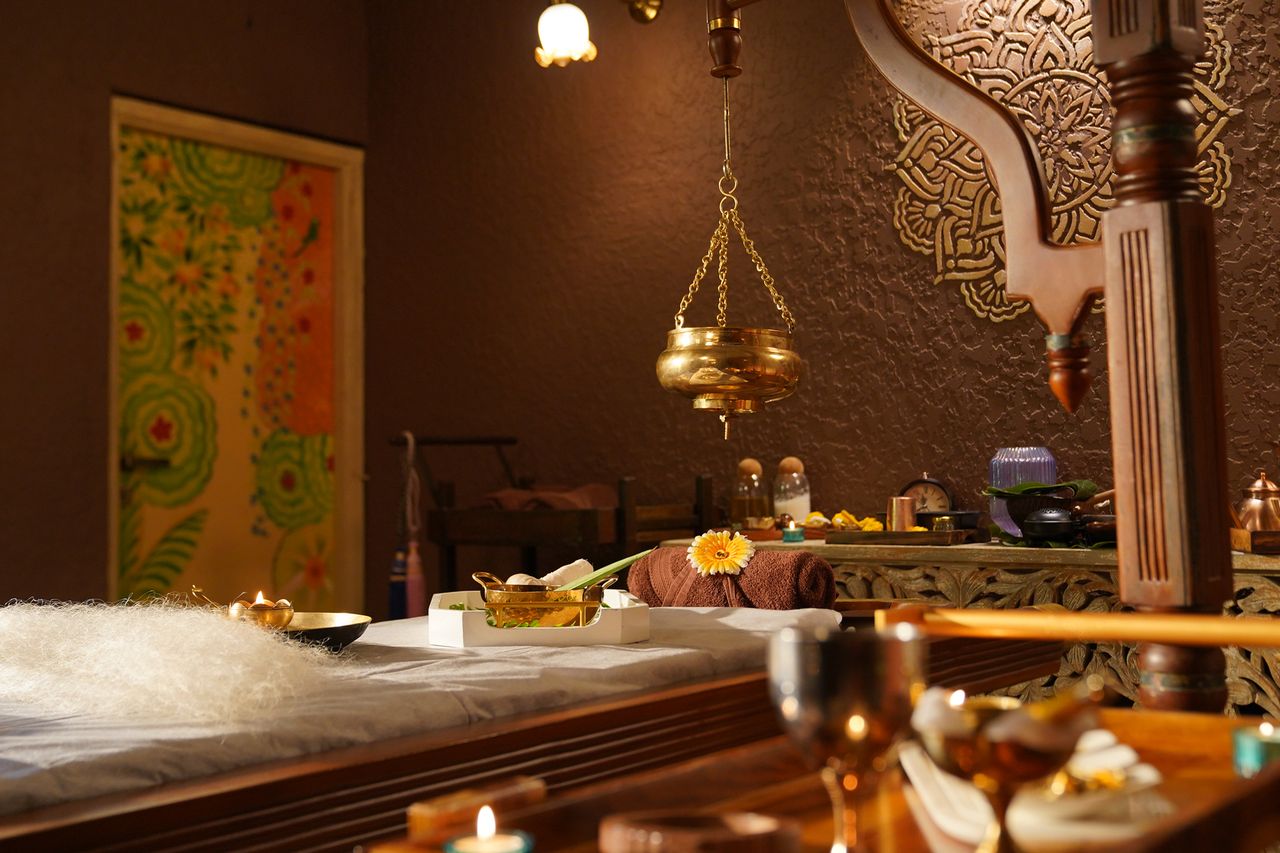
A room in The Bamboo Forest Nature Conservancy’s Ayurvedic spa.Credit: The Bamboo Forest
I toured the Ayurveda spa and found that many guests came to the Conservancy not just for the wildlife, but also to soothe certain health issues and reduce stress. The spa treatment rooms, clustered around a village courtyard, are painted in calming earth tones and decorated with delicate mandala motifs. They are equipped with carved wooden tables for traditional treatments, such as shirodhara, where a steady stream of oil is applied to the forehead, and abhyanga, an Ayurvedic massage that encourages deep relaxation with circular movements. There’s an on-site Ayurvedic doctor who offers personalized consultations as part of the property’s broader wellness and wilderness program that combines healthy eating, daily yoga, and time in nature.
There are no wheelchair-accessible rooms at The Bamboo Forest Nature Conservancy. The property also has dirt paths as well as steps to common and guest rooms.
How to Book

Sundowners at the Conservancy.Credit: The Bamboo Forest
The Bamboo Forest Nature Conservancy is an independently owned property and is not part of any major hotel loyalty or credit card program. Advance reservations are strongly recommended, especially during peak wildlife-viewing months from November through May. The cost of a hotel stay includes lodging, meals, and guided game drives.
Nightly rates at The Bamboo Forest Nature Conservancy start from $469.
Every T+L hotel review is written by an editor or reporter who has stayed at the property, and each hotel selected aligns with our core values.
on Travel & Leisure
Source: Nature
