Scientist fights for custody of badger he rescued and drinks tea with in yardPaul Andrews,

In April, Wilson - who runs GW Ecology - was called out to rescue a thin, malnourished cub found in a cattle trough roughly 300 feet from her sett (Image: SWNS)
A scientist is battling to retain custody of a badger he saved from the wild and now shares tea with in his backyard. Ecologist Graeme Wilson, 55, was summoned to rescue the "thin and dirty" cub after she was found malnourished in a cattle trough.
Located 300 feet from her sett, Graeme nursed her back to health and named her Harriet. He believes she had been hand-reared previously and cannot be released back into the wild, as she would face injury or death.
Graeme reports she has abandoned her nocturnal habits and enjoys playing in the garden while he works.
Wildlife experts floored after watching back hidden footage from forest
Study finds first ever kiss happened millions of years before humans
He has attempted to release her, but said she "ran back and stood by the crate as if to say 'take me home.'"
NatureScot has denied his request for an educational license to keep Harriet.
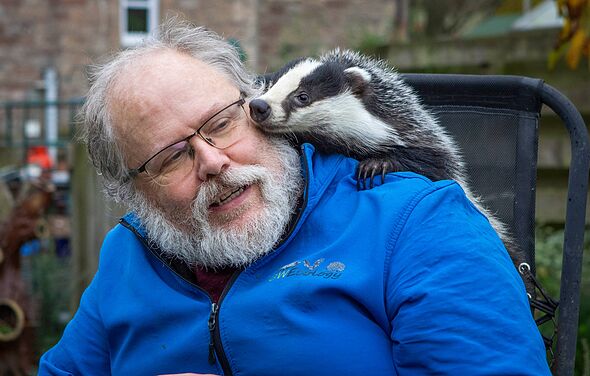
UK law requires wild badgers to be successfully returned to nature or placed in a licensed zoo (Image: SWNS)
Graeme operates GW Ecology, a rescue and rehabilitation service from his residence in Denholm in the Scottish Borders.
He explains the badger adapted to bottle-feeding "very quickly," indicating she must have been fed this way before.
Graeme stated: "I was very concerned about her. I had previously rescued another badger who was weaker than her and didn't make it. Even though it was so weak it fought me to take the bottle so I thought Harriet was very strange."
"I never engaged with her at all, I put food in, formula in the bottle, water, and just checked her from a distance to see if she was putting on weight. I never handled her and I didn't want to encourage her being around people. They're a clan animal so their used to being around a group. I tried to release her multiple times. On the second time she ran back and stood by the crate as if to say 'take me home.'"
Graeme has consulted with fellow ecologists and veterinarians who believe she had previously been hand-reared before being introduced to a sett.
Their assessment is that she has become habituated rather than domesticated, which explains why she gravitated toward the nearest human structure she could find. Harriet does not display nocturnal behavior, as this is a trait typically learned from parents.
DON'T MISS:
Sea lion pup rescued after it wandered inland to San Francisco neighborhood
Activists save dogs from 'meat market' horror, in final operation before ban
Once-extinct animal released in Australia after being bred for survival
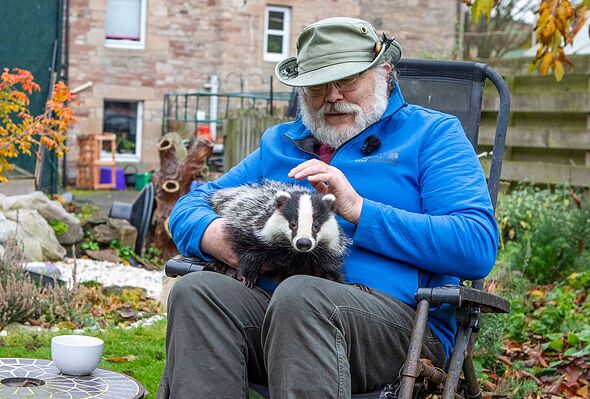
Graeme and Harriet get along well but badgers are not meant to be kept as pets (Image: SWNS)
She is permitted to roam the garden for exercise several times daily and shadows Graeme wherever he goes.
He noted: "She'll decide when she's had enough and stands by the workshop door where she lives. She'll get up to mischief as well, in a watering can or a bag if I've been doing some tidying up. She'll go rooting through the bag.
"Harriet will nibble at people's legs to take fleas of you because she has those natural behaviors of being in a clan, but she's just doing them around humans rather than around badgers."
Graeme submitted an application for an educational license at the beginning of June, but did not receive a response until late September.
His intention was to bring Harriet to events if she was comfortable, or produce videos on social media championing badger conservation and raising awareness about encountering young animals in the wild. Graeme remarked: "We don't want young animals turning out the way she has."
Following the rejection of his application, Graeme has been searching for a licensed zoo to take her in, though she would first require testing and vaccinations, a process that would take considerable time.
He explained: "If people are looking at her from behind a barrier and she sees them as her people, she'll get very upset and stressed trying to get to them."
Graeme spent a month worried police would arrive at his home and remove her in a "heavy-handed" manner.
He commended Police Scotland for being "understanding" despite having their "hands tied with the law."
He stated: "You can't release an animal in captivity this weekend with all the fireworks. After this weekend if nothing changes, I have no choice but to release her. If she decides to stay around here that's okay as she's 'released,' but I have grave concerns about her.
"I'm concerned she's going to end up in the road or approach a person and it wouldn't end well. This is not something I wanted. I did not want to have a badger or responsibility for a badger but unfortunately this is what has happened and my only concern is for Harriet's welfare now."
Graeme remains hopeful NatureScot will reverse their decision, as he has only consented due to legal pressures.
NatureScot said: "We are continuing discussions with Mr. Wilson and other relevant organizations to try and find a pragmatic solution to this individual situation. The welfare of the badger is, of course, key while we consider the circumstances of the case."
The Scottish SPCA has cautioned the public against attempting to hold a sick or injured badger.
A spokesman said: "Badgers can become aggressive if they are in pain or feel threatened; they can give a nasty bite and their sharp claws could cause serious injury, if you try to catch it. You should also contact us if you find a badger during daylight hours as they may be struggling."
A petition seeking authorization for Graeme to keep the animal has garnered hundreds of signature.
It states: "When Harriet was well enough, Graeme made multiple attempts to release her back to undisclosed sett locations. These attempts were unsuccessful. Harriet became extremely distressed and appeared determined to return to Graeme and the environment she recognized as home. She also appeared uncomfortable around other badgers."
Police Scotland has been notified of the situation.
Source: Nature
